
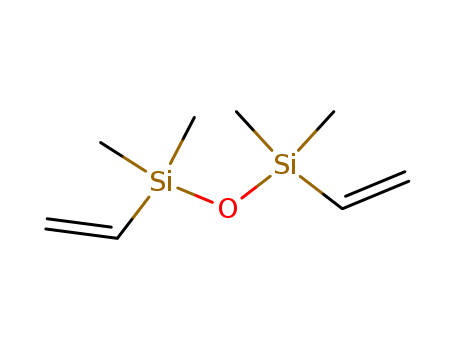
2627-95-4
- Product Name:Divinyltetramethyldisiloxane
- Molecular Formula:C8H18OSi2
- Purity:99.0%; 99.9%
- Molecular Weight:186.401
- Apply:High purity vinyl siloxane intermediate for silicone rubber and addition curing systems.
Product Details
| Chemical name | Divinyltetramethyldisiloxane |
|---|---|
| CAS | 2627-95-4 |
| Product Name | Divinyltetramethyldisiloxane |
| Quality index | Purity ≥99.00%/99.90%, moisture ≤50ppm/100ppm, chloride ≤5ppm/10ppm, vinyl content ≥27.5% |
| Packing size /kg | 20、160 |
| Molecular weight | 186.41 |
| Boiling point | 139 |
| Density | 0.810~0.820 |
| Refractive index | 1.410~1.412 |
| Product application | The main preparation of vinyl silicone oil, raw rubber, silicone rubber, silicone resin, preparation of additive liquid silicone rubber, catalyst platinum complex. |
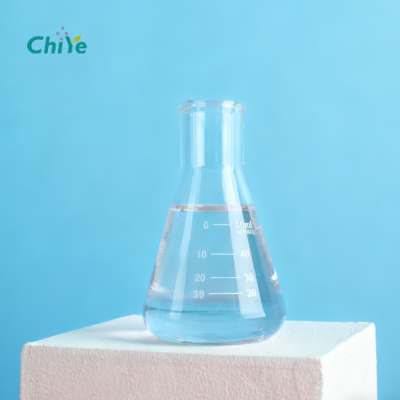
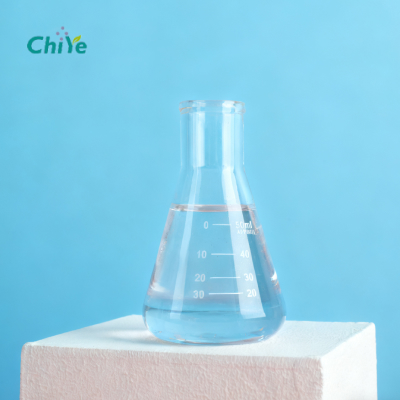
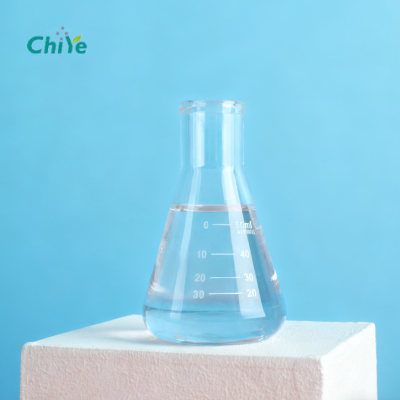
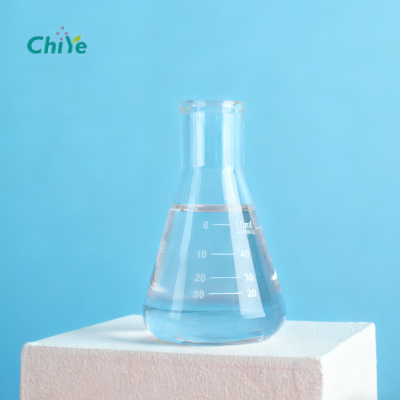
| Appearance and risk | Colorless transparent liquid; Flammable liquid, prevent direct inhalation |
Divinyltetramethyldisiloxane, a chemical compound, is increasingly drawing attention in various sectors. In the field of materials science, divinyltetramethyldisiloxane offers distinct possibilities for the development of novel materials. Its molecular structure endows materials with special properties. When incorporated into polymer systems as a monomer or cross - linker in the synthesis of certain high - molecular polymers, it can enhance the flexibility, heat - resistance, and chemical stability of the polymers. This enables the manufactured materials to be used in more demanding environments. For instance, in the aerospace industry, it can be used to produce heat - resistant parts of aircraft; in the electronics industry, it can protect electronic components from high - temperature and chemical corrosion. In organic synthesis chemistry, divinyltetramethyldisiloxane is also an important research target. Chemists utilize its unique chemical reactivity to develop a series of novel organic synthesis reactions. It can participate in multiple reaction pathways to construct complex organic molecular structures. These organic molecules are of great significance in drug research and development. Many drug molecules require specific structures and functions, and the molecular structures derived from divinyltetramethyldisiloxane may provide new ideas for the development of new drugs. For example, in the research of anti - cancer drugs, some compounds based on divinyltetramethyldisiloxane - derived structures have been found to have the potential to inhibit the growth of cancer cells, which brings new hope for cancer treatment.
Buy reliable Quality Divinyltetramethyldisiloxane 2627-95-4 raw material with Honest Price
- Molecular Formula:C8H18OSi2
- Molecular Weight:186.401
- Appearance/Colour:Colorless or yellowish transparent liquid
- Vapor Pressure:7.744mmHg at 25°C
- Melting Point:-99 °C(lit.)
- Refractive Index:n20/D 1.411(lit.)
- Boiling Point:138.999 °C at 760 mmHg
- Flash Point:33.325 °C
- PSA:9.23000
- Density:0.813 g/cm3
- LogP:2.86360
Divinyltetramethyldisiloxane(Cas 2627-95-4) Usage
| Summary | Divinyltetramethyldisiloxane, often abbreviated as DVTMDS, is a siloxane, meaning it contains silicon and oxygen atoms in a repeating chain, and it has two vinyl groups (H2C=CH-) attached to it. This unique structure makes it a versatile building block in various industrial applications, particularly in the production of silicone-based materials. |
| Roles | Divinyltetramethyldisiloxane is a vinyl-functional siloxane primarily used as a crosslinker or modifier in silicone formulations. It contains two reactive vinyl groups that participate in platinum-catalyzed hydrosilylation reactions with Si–H compounds, enabling the curing and crosslinking of silicone elastomers, coatings, and adhesives. Additionally, it serves as a key ligand in Karstedt’s catalyst, stabilizing and enhancing the activity of platinum in these reactions. Its low viscosity and compatibility with silicone systems also make it useful as a reactive diluent to fine-tune mechanical properties and processing behavior. |
|
Flammability and Explosibility |
Flammable |
InChI:InChI=1/C8H18OSi2/c1-7-11(6,8-2)9-10(3,4)5/h7-8H,1-2H2,3-6H3
2627-95-4 Relevant articles
PROCESSES FOR SYNTHESIZING UNSYMMETRICAL DISILOXANES
-
Paragraph 0047-0048, (2021/06/22)
Described herein are methods for making ...
Low alkoxy branched siloxane continuous number bath method
-
Paragraph 0158-0169, (2019/05/15)
The subject matter of the invention is a...
Preparation method of 1-vinyl-1,1,3,3,3-pentamethyldisiloxane
-
Paragraph 0039-0041, (2018/09/11)
The invention relates to a preparation m...
Method for preparing 1,3-divinyl-1,1,3,3-tetramethyldisiloxane
-
Paragraph 0014; 0015; 0016-0019; 0020-0023; 0024-0027, (2018/06/26)
The invention discloses a method for pre...
2627-95-4 Process route
-

- 1066-35-9
dimethylmonochlorosilane

-

- 1719-58-0
Chlorodimethylvinylsilane

-

- 3277-26-7
1,1,3,3-Tetramethyldisiloxane
-

- 2627-95-4
tetramethyldivinyldisiloxane
-

- 55967-52-7
1,1,3,3-tetramethyl-1-vinyldisiloxane
| Conditions | Yield |
|---|---|
|
In water; at 0 - 20 ℃;
|
62 %Chromat. 11 %Chromat. 26 %Chromat. |
-

- 75-77-4
chloro-trimethyl-silane
-
- 1719-58-0
Chlorodimethylvinylsilane
-

- 107-46-0
Hexamethyldisiloxane
-

- 1438-79-5
1,1,3,3,3-pentamethyl-1-vinyldisiloxane
-
- 2627-95-4
tetramethyldivinyldisiloxane
| Conditions | Yield |
|---|---|
|
With water; at 0 - 10 ℃; for 2h;
|
|
|
In water; at 0 - 20 ℃;
|
49 %Chromat. 22 %Chromat. 28 %Chromat. |
2627-95-4 Upstream products
-
60-29-7

diethyl ether
-
1719-58-0
Chlorodimethylvinylsilane
-
5356-83-2

ethoxydimethylvinylsilane
-
67-64-1

acetone
2627-95-4 Downstream products
-
19298-82-9

1.3-Bis-<2-(2-(2-phenylphosphinoethyl-tetramethyldisiloxanyl)-ethyl-phenyl-phosphino)-ethyl>-tetramethyldisiloxan
-
19298-81-8

1.3-Bis-<2-phenyl-phosphino-ethyl>-tetramethyl-disiloxan
-
2295-17-2

1,3-diethyltetramethyldisiloxane
-
99829-04-6

1-Ethyl-1,1,3,3-tetramethyl-3-vinyl-disiloxane
Relevant Products
-
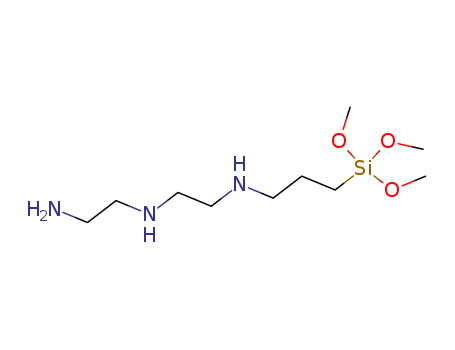 Diethylenetriaminopropylmethyldimethoxysilane
CAS:35141-30-1
-
 Octyltriethoxysilane
CAS:2943-75-1
-
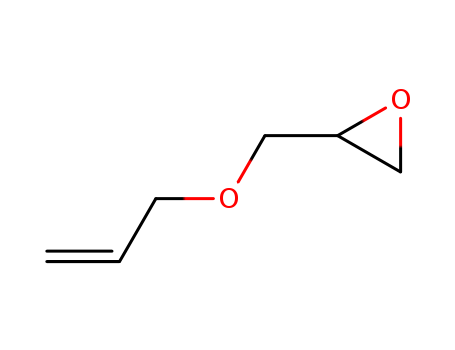 Allyl Glycidyl Ether
CAS:106-92-3